
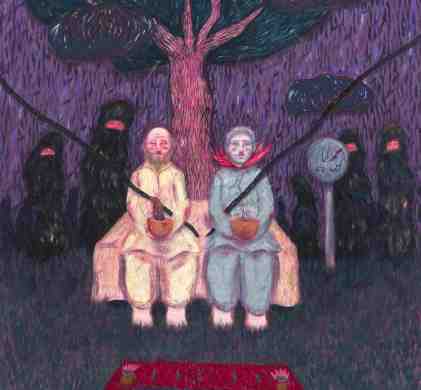
The Remains of Self: The Story of a Fundamentalist
There, that on the table you ask, why that’s a snapshot of Arun as he was then, open collar, never a tie, he hated the feeling of a closed neck; like a wrung chicken suffocating he would say. He hated buildings too, the college halls, administrative blocks, banks where Father fixed summer jobs for him. He said closed spaces did something to him; walls crouched upon him from all sides, ready to devour anyone, gruesome vampires sucking life force from those who grovelled for a living within. Men were born to inhabit the wild, the open, he would say, and so leather bag slung upon shoulder, a notebook in hand, it’s the wild spaces that my brother would roam. He was always looking for a story, a clue to make it happen, rushing into the newspaper office to meet that deadline, and as swiftly rushing out to lounge in … I had never been to those night dens that draw those who yearn for free worlds. As a roving journalist for a Bombay newspaper Arun often went there when the day’s business was done to imagine this world he would set free.
Growing up, Mother constantly spoke to us of what it would be like to work in fancy airconditioned offices, split level or central, both expensive. She spoke of silk flowers in cut-glass vases, of polished granite floors that never stained, of dark blue suits, of white shirts worn with discreetly embossed gold cufflinks. Of the spic n’ span-ness of it all. These were hallmarks, for her, of a successful life. They became mine too. I hated that our doors never shut properly, that the Central Public Works Department housing had bathrooms that were dull mosaic with antiquarian plumbing. We both moaned when our desert cooler recycled silent humid air in the sticky monsoons of Delhi. Watching her dust dandruff off Father’s coat, I would notice the fine lines of worry that came too early from constantly scrounging for bargains at Sarojini Nagar market that was close to the Government quarters of R K Puram where we lived. She spoke to Arun of recruitment to foreign banks. She liked the cars and designer clothes that went with MNC jobs, the swank corporate offices. She spoke of dollar salaries. She spoke of America. America & America where the ice cream tubs were big, where supermarkets were stocked with all an Indian housewife in the `80’s longed for. On Father’s return from that one trip abroad, (a two-month Commonwealth fellowship on Library Systems and Documentation at Bath, Wales), she lovingly stacked the little soaps and shampoos he had stolen from the washroom of the Air India Boeing, the wee bottles of Welch’s grape jelly (outbound) strawberry jam (inbound). Out of his suitcase tumbled Mars bars, Camay soaps, Head & Shoulders shampoos, a Krups Food Processor, a coffee grinder and padded jackets for us from Marks & Sparks. The processor was taken out once a month when making Madeira cake, cleaned, wiped, and returned to the Godrej steel almirah where Mother’s Kanjeevaram silk sarees were stored.
Mother often prodded Arun to apply for scholarships to Oxford and Cambridge. But she spoke of goals that Arun didn’t want to attain, places he did not yearn to visit. He listened to her prodding, silent and abstracted. They excited me, these worlds she wanted for him, but he, unmindful, would stare from our whitewashed verandah at the squatters’ huts of the juggi jhopadi colony that ran along the railway tracks, the snotty-faced, pot-bellied kids of the maidservant who came from there to wash and scrub for us, the snaking queues at government fair price shops where a peon from Father’s office fetched our monthly wheat and sugar rations, and the public latrines with their filth and stench.
It was from this same whitewashed verandah that we saw the Sikh riots that broke out in `84 when Prime Minister Indira Gandhi was assassinated by her Sikh bodyguard, the same squatters’ huts razed, and from where we smelt the acrid odour of flesh burning. For weeks after, my brother gazed out at dusk from that same verandah. Exasperated, Mother would scream, turn away son, don’t look at the ground son, shoulders erect son. Pass your exams son, become a professional and get on with your life son. Boundaries – we desperately needed them or the ravenous poor would grab the little that we middle class had. Couldn’t he see that? Think of the hordes unleashed she cried, who could survive it, the deluge? Boundaries beyond which the likes of squatters lived were necessary, they were never meant to be crossed. But my brother, more than any, needed to know why we hadn’t erased those boundaries. He questioned those grandiose claims revisited every Independence Day, with paeans to Justice, Liberty, Equality, Fraternity. Fraternity? He saw those un-crossable boundaries widening on the guts of pigs and cattle and goats devoured by hungry urchins from rubbish heaps, festering on illicit deals cut in greasy corridors of government offices at North Block, in the foreign bank jobs Mother wanted him to have. But he said nothing. Silent, abstracted, he nodded at her strictures and continued to look away at the tops of buildings sprouting tv aerials and washing lines, at cuckolding mates of gray pigeons roosting in ventilators. Was it as early as that then that he began seeking those dens that promised worlds where such boundaries would coalesce and cease?
A year later it was at one of those dens that my journalist brother first heard of Godschild. Godschild wasn’t his real name but that’s what the people at his newspaper called him. No one knew Godschild’s real name, or where he’d come from, except yellow, was Godschild’s colour. It was with this yellow he was going to turn the city around to make it One Bombay, One People. Arun began to follow Godschild. During the day, in the inner city and down the long winding trains that disgorged the ants that built its edifices, my brother jostled shoulder to shoulder with commuters from Joshvilli, Nashaavilli, Villivilli, seeking stories. He watched the loaves and fish divide into hundreds of portions to feed the hungry who went home chanting of a Bombay resurrected into a giant batata vada vending machine that would, at the press of a button, feed each and every one of them in this equitable world he preached of.
It was on one of his roving days that Godschild called for Arun. Someone had pointed him out in the crowd, had seen the zeal in his eyes, his passion – a soldier for fraternity.
Godschild said to my brother, will you help me root out the vermin that infest this city, this pernicious species of gutter vermin? His words went straight to my brother’s heart. My brother, so proud that he was singled out that he stared into Godschild’s black, hooded eyes with joy. It was the vermin who divided rich from poor, healthy from sick. If he took this task upon himself, Godschild continued, he would be a true soldier of the nation. But how would he recognise them, my brother asked, how would he recognise the vermin? When the time came someone would point them out to him, Godschild replied.
Fingering each brown meditation bead, Godschild spoke again, and in silent concentration my brother listened, listened to every word that Godschild said. First go forth and spread my gospel, boomed Godschild. Print it in your stories, embellish it in people’s hearts. Fill in them a hate for these gutter vermin so that when commanded, they will rise to the kill. And he, Godschild, draped a yellow vest upon Arun, proudly upon his bare body. As coarse cloth touched golden skin in my brother’s heart grew a mission. He was so proud that he was singled out, that he stared into Godschild’s black hooded eyes with joy.
Now my brother ached and spilt purpling blood over each word he wrote for his newspaper, words he was using to create those yellow-hued dreams, words that he spat to denounce the gutter vermin that slithered beneath the sewers poisoning it, causing hateful divides, stopping Bombay from becoming One City, One People. They had so infested the metropolis that they could at whim, destroy the whole soaring edifice. A veritable Saul on a motorcycle, my brother rode through street and lanes screaming himself hoarse with the newfound truths that Godschild had filled him with. He bombarded his editor with news of cyanide-spouting factories, screamed of rapes at night shelters, lambasted him, saying it was these wretched vermin that did it, the gutter vermin. Why didn’t his editor print what he wrote, of virgin forests pulped, of the horrible waste, oh it was those gutter vermin. He would cry in pain at each razed hutment, a conspiracy of vermin, the same dammed gutter vermin … but his editor wouldn’t listen. Why wouldn’t he listen about the murderers, rapists, soilers, thieves? Why did he snigger and laugh and scoff, asking, what badge did they wear, which imaginary vermin?
When those people disgorged from tarantula buildings, queuing in front of food vendors, street dhabas or fancy restaurants he wouldn’t listen (What colour caste or creed? Had he seen one?, he asked). My brother went to railway stations and turning a bedroll into a makeshift podium, screamed to the crowds rushing to catch trains to stop. Stop, where were they going? Where were they running to? There was nowhere they could go, the skies were full of metal, the rivers toxic, the seas swallowed by cyanide waste. Didn’t they know there was no place to hide from these gutter vermin that had infested this once pure city. He screamed at drivers to cancel trains. Didn’t they know their indifference had cast it in doom? Why wouldn’t they listen? Why wouldn’t anyone?
Then one day, quite surprisingly, one day like any other ordinary Bombay day, when suburban trains spilled out slithering sweaty bodies, one person stopped, stopped to cheer him? He clapped in support, in agreement; it was the fault of bloody gutter vermin. My brother waved back. And two, three, more stopped. Tens and twenties stopped. And a crowd collected that roused and cheered him? Vermin, gutter vermin, they chanted. Someone out there had heard him, had recognised the truth of what he said, the truth of Godschild’s message. Throw them out, they began to chant. Go hunt the vermin, burn the vermin, torch them. They were shouting, they were chanting, they were listening at last – and a rousing fire swamped the station to fly in one wave towards the first of the wretched vermin whose bloodied scream lacerated the sky with vermilion.
Now, said Arun to his editor, thumping his table, rattling the inflated plastic globe upon it, you see he was not imaginary, we found him, he was there, a gutter vermin, a wretched circumcised gutter vermin. Now you have your story. Print it.
Following that, night after night, mounted upon a bedroll on railway platforms, he expounded in messianic glee. Your one story, your two stories, your many stories, dear editor. His editor rubbed and clapped his hands, ahaa, sensational stories.
That was my brother then, in blue shirt, tie-less heaving with those who crawled upon railway platforms, ate from dustbins, pissed in drains, yes, that was my brother then, teaching confused abject people how to get prosperous by rooting and hunting gutter vermin. But as the months went he found not only Godschild’s vermin, but all kinds of vermin, sewer, cesspool, every pernicious type of vermin began to haunt him. He had to make Bombay a vermin-free city. He had to attack all vermin.
In no time word reached Godschild. He heard how well my brother had spread his mission. He heard how his tormented warnings were placing daggers into the hands of the tongue-less poor. But he was not happy. For he heard the grey green fungus of humanity that clung upon the edges of railway platforms were moulting into vipers and attacking every kind of vermin. They were attacking spotted vermin, garbage vermin, chimney vermin, sewer vermin. They were snaking into trains that disgorged them on the other side of the city, the wide open city, into those same buildings that disgorged the city’s work force and dragged out more and more foul vermin. Godschild heard about those twelve beggars that clung to my brother’s every word striving, as he had promised, to make Bombay a vermin-free city.
When Godschild learnt of this, he sent word to my brother that he was coming, coming to applaud him who had spread his message so well. But when he came his brittle greeting scratched the fragile tissues of my brother’s mind. Arun was certain Godschild didn’t like that they, poor and tongue-less, were carrying forward his mission. Why didn’t Godschild like him, he who had spread his gospel so well? Hadn’t he given it true meaning? He begged Godschild, why don’t you like me anymore, what did I do wrong? Hadn’t he single-handedly roused the city to a pitch against all vermin? Dashing boundaries so they would coalesce and cease? One city One people?
But Godschild only raised his hand and whispered, come and rest my friend, and with his silky fist manacled my brother’s arm. The lights of the airport were twinkling. Where are you sending me, Arun wailed, where are you taking your truest disciple?
His smile, like a stick he wielded, Godschild sang, you have prepared the ground well my son, now it’s time to rest, to go to the golden sands and beaches of heaven, where no vermin will trouble you again. And off he sped leaving my brother on the tarmac to burrow into a plane that took off. But as my brother looked down from its oval window he saw the ground below catch fire, the thistle and dry thrush burst into flames, saw buildings explode, saw the fire spread. And as his plane gained height, he saw a sun scorched skyline leaping. From the plane he saw all this, a plane that never descended, but strapped him within the bare walls of a whitewashed room, resonating with the lash of wave upon wave. Through the mullions of a barred window he watched sea, sea and green sea until he regurgitated weedy salt water which oozed out of little pores in his brain and entered his soul, melting his brittle sun-bleached bones into one pulpy mass. Then a phone, black-hooded, came into his dream, and out of its cobra-headed mouthpiece came the voice of his editor calling. Your story boy, he cackled, the city is in flames boy, they are rioting against your gutter vermin! It was you who nailed the first one, your circumcised bloody gutter vermin. Now they’re hungry for more. Boy gimme more, Dilli, Madras, Calcutta, the whole nation wants to root out gutter verr meen.
Arun grasped the mouthpiece and shouted into it till his veins popped. Stop stop, he shouted, stop, what of the chimney vermin, sewer vermin, garbage vermin, green and blue and red vermin, violet and gray and yellow vermin…. His fight had been against all pernicious vermin. But a whirring came and then the sounds of laughter. Then no sound, no sound at all. He continued to hear it ring every day, three months, ninety days, the echoing laugh, till one day, he split, cleaved into half.
I had a new teaching job in a Bombay College when I heard of this. I informed Mother. She pleaded with me to get him to return. Did he not understand why, as a young boy, they had set him boundaries that were never to be crossed? But my brother hadn’t heard her? Could he tell her he had helped burst the city’s festering sewers, inhaled its acid fumes? Could he tell her it was he who had heard the first scream ring across a railway platform into a sun-scorched sky, heard it repeat in his head night after night, heard metal scrape against bodies and billowing fumes rise from the mountainous heaps of rotting riotous dead. How could he tell her the world she held dear had long since become nought for him, and his had become … else? How could he tell Mother, aging, encapsulated, manicured, dreaming of $ jobs, of her son’s role in the Bombay riots. Worms had crawled out and they were swelling and swelling, eating his head and they wouldn’t crawl back in again.
I went to fetch Arun back. I took off his striped hospital uniform and put him into his old blue shirt. I brought him to live with me. I got him a job, small, uncompromising, but a job. Then I got him another, and another. It didn’t help. He slapped the technician at the tv studio at the last job he had. Making passes, he said, the crew, gays all, hadn’t he written about them, the underbelly of Mumbai bellies. I’m surrounded by those bastards, Sis, they look at me like they will devour me, my gonads, testicles, penises…. How many did he have?
Every morning he washed and shaved deliberately, prepared his face as if going to office. I would need the bathroom first, but he would never let me have it; the deadline, the phantom deadline he used as an excuse. Bathed, shaved, he would ready himself by the phone, waiting for it to ring. A newspaper job, just a reporter’s job to set it right is what he wanted. It will ring, he’d say. Go rest, I’ll call you, if it’s for you I’d reply, but he would not leave Mother’s old cross-stitch cushion. When I returned in the evenings, tired, hungry, angry at the limp arms of faceless crowds hanging upon train bars that trickled salty sweat over my good clothes, and pushed the door open, it would only go up to the point where the chain held. I knew he’d been watching for me from the scratched corner of the green painted windowpane, and seen me coming – yet the door remained locked, always. Cautiously he’d rise upon hearing my anxious ringing and peering out of the narrow gap, would query tremulously, who’s there? And I, tired, would respond, as if for the first time, it’s I, your sister. To which he would reply, oh I was just here, right here, near the phone, waiting. He will call today, surely my editor will call sister – just one story to set it right.
Senses alert, the trampling of sweaty smelly crowds forgotten, the boss out of my mind, in that instant I would meet his expectant eyes and reply, er, not today but next week surely he will.
When the letter came offering me this job in San Diego I knew I had to leave. The day is as clear as that picture of him at my table. It is five in the morning. Saffron lights dazzle the still sky and spill over a Eucharist moon. The alarm goes off, the phone rings. I pick it up. Your early morning call ma’am, the operator says. I head for the bathroom first. I pull the flush long and hard so he hears it. I know he has lain awake all night waiting. The phone rings again. This time it’s for him. She asks him to be ready by the door. She says she’s in a hurry. Last month’s rent is paid. I turn around to see if I have left anything. I pick up a photograph of Arun as he was then, blue shirt, open collar, never a tie, and slip it into my bag. Hang the owner’s keys on the kitchen rack and leave. My landlord knows why I must leave this city that has cleaved my brother’s soul in half.
The cab driver holds the door open for Mother. He waits below as she slowly climbs up the four floors to my apartment. She climbs steadily higher and higher, her breath coming in spurts. When she reaches my door she does not enter, she cannot walk into this shell that holds the remains of her son. She does not look into his eyes when she asks him if he has eaten, asks him if he’s packed. Down the stairs we go. Arun slips his hand into mine, pretending to be steadying himself.
We walk steadily, not a word between us, but we breathe. The driver picks up his bags. We leave the festering smells of the suburban station yard where early morning queues have begun to file. We leave this saffron-bathed city together, the skyline upon which are flung ravens crowing of a morning that already smells stale.
The day I caught my flight to California is clear in my mind. My brother holding my hand asked, my older brother, when will you return sister, when will you write? And I, looking into his stone black eyes knew, it was not me he was afraid of losing, but this bridge that connected the world he once believed in to the one he inhabited now. And as my flight took off he was afraid he would finally have to cross over, and in crossing over, would lose the remains of himself.